Less than five years’ ago, it was possible to dream of buying a Rolex to celebrate an important milestone in life: marriage, promotion, retirement or even bereavement.
These would not be purchases planned years in advance, they were closer to spontaneous reactions that create unbreakable emotional links between a luxury watch and its owner.
That was before the pandemic shut down manufacturing for three months in Switzerland, supply chain problems that slowed production for years, and spiking demand caused by lock downs robbing the rich of their usual pleasures.
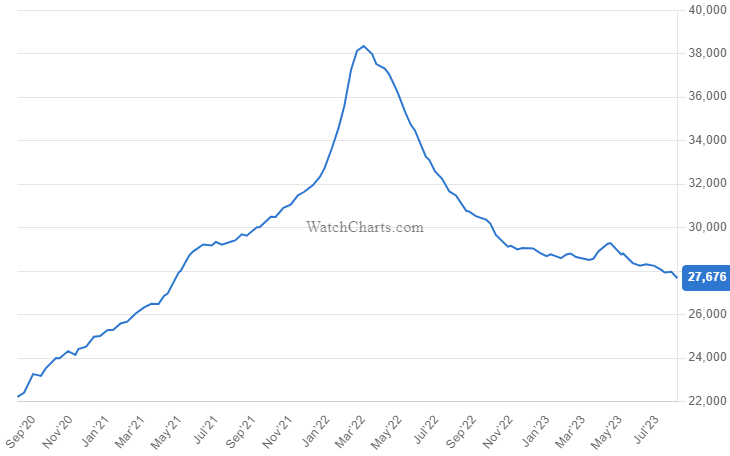
Data from WatchCharts.com, which tracks prices for luxury watches on the secondary market, shows what happened next as market forces (demand exceeding supply) kicked in.
Average pre-owned Rolex prices rose from $22,000 in September 2020 to over $38,000 in the spring of 2022.
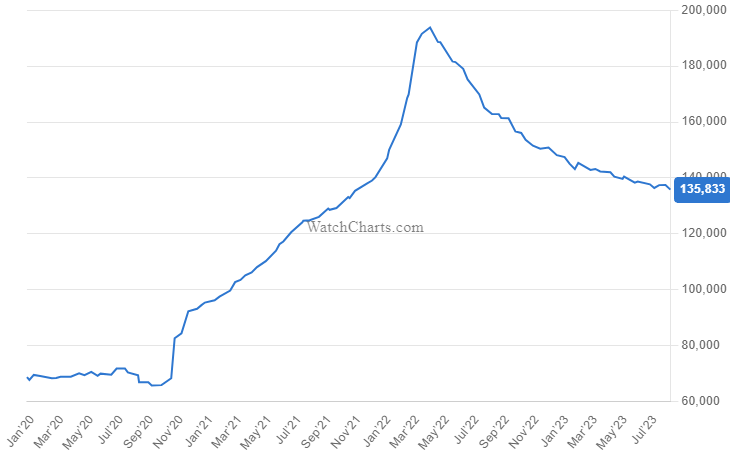
Prices for Patek Philippe, which has limited production to under 70,000 for many years, were even more wild, jumping from an average of around $70,000 in 2020 to peak at over $190,000 early last year.
Authorized dealers for Rolex and Patek Philippe were suddenly peddling some of the most desirable, investment-grade, assets on the planet, and customers came flocking.
You would need to have been living under a rock not to have become aware that waiting lists were lengthening and shortages were becoming more acute, but customers who might only buy one expensive timepiece in a lifetime were least-likely to be well-informed.
Investors, dealers and flippers were fully alive to the opportunities.
Market forces drove authorized dealers in the direction of selling more watches to the same people; first to reward genuine collectors for their loyalty, secondly to avoid the risk of selling to flippers who would immediately resell them on the secondary market.
However, this direction of travel has its downsides. New customers are always going to be needed in any industry, particularly one where customers tend to be older.
It is also corrosive to a brand’s image, particularly one like Rolex making over one million units per year, if it is seen as inaccessible.
Which is why Patek Philippe’s president, Thierry Stern, told retail partners at Watches and Wonders this year that he wanted 25% or more of watches to be sold to new customers.
Anybody who has tried to get on a waiting list for Patek Philippe will know that this is a tough target.
Unless you are looking for one of the less popular models in the Calatrava family, or something from the ladies’ line-up, you can forget it.
Complications and sports watches might be attainable as a second and third watch from an AD, but never a first piece.
All of which leads me to a conversation with Tom Blumenthal, owner of Gearys in Beverley Hills, which is opening large monobrand boutiques for Patek Philippe and Rolex next on Rodeo Drive next year.
This begs the question: why bother when you already have more super rich customers than you can possibly sell watches to?
Mr Blumenthal admits that keeping Rolex and Patek Philippe happy and unlikely to have their heads turned by any rival retailer is an important consideration, but he also insists that the bigger showrooms, which will get better allocations of watches, will allow him to keep existing and new customers happy.
In fact, he intends to continue selling two-fifths of his Rolex and Patek Philippe allocation to new customers.
“We allocate around 40% of our watches to new clients for both Rolex and Patek Philippe. That is very important to us,” he tells WatchPro in our Big Interview this month.
Gearys took the decision to protect 40% of its allocation for new business a couple of years’ ago.
“The most important thing we can do is to keep demand strong for these brands, so you need to have new clients,” My Blumenthal insists.
Before Gearys gets inundated with potential clients flying into Los Angeles to get on its waiting list, Mr Blumenthal does clarify that he is looking to sell as much as possible to local clients.
Not easy in a place as popular with tourists as Beverley Hills.
“We certainly have a lot of visitors, and this can be an additional complication because we try to sell around 80% of our watches to people who live locally,” he concludes.